
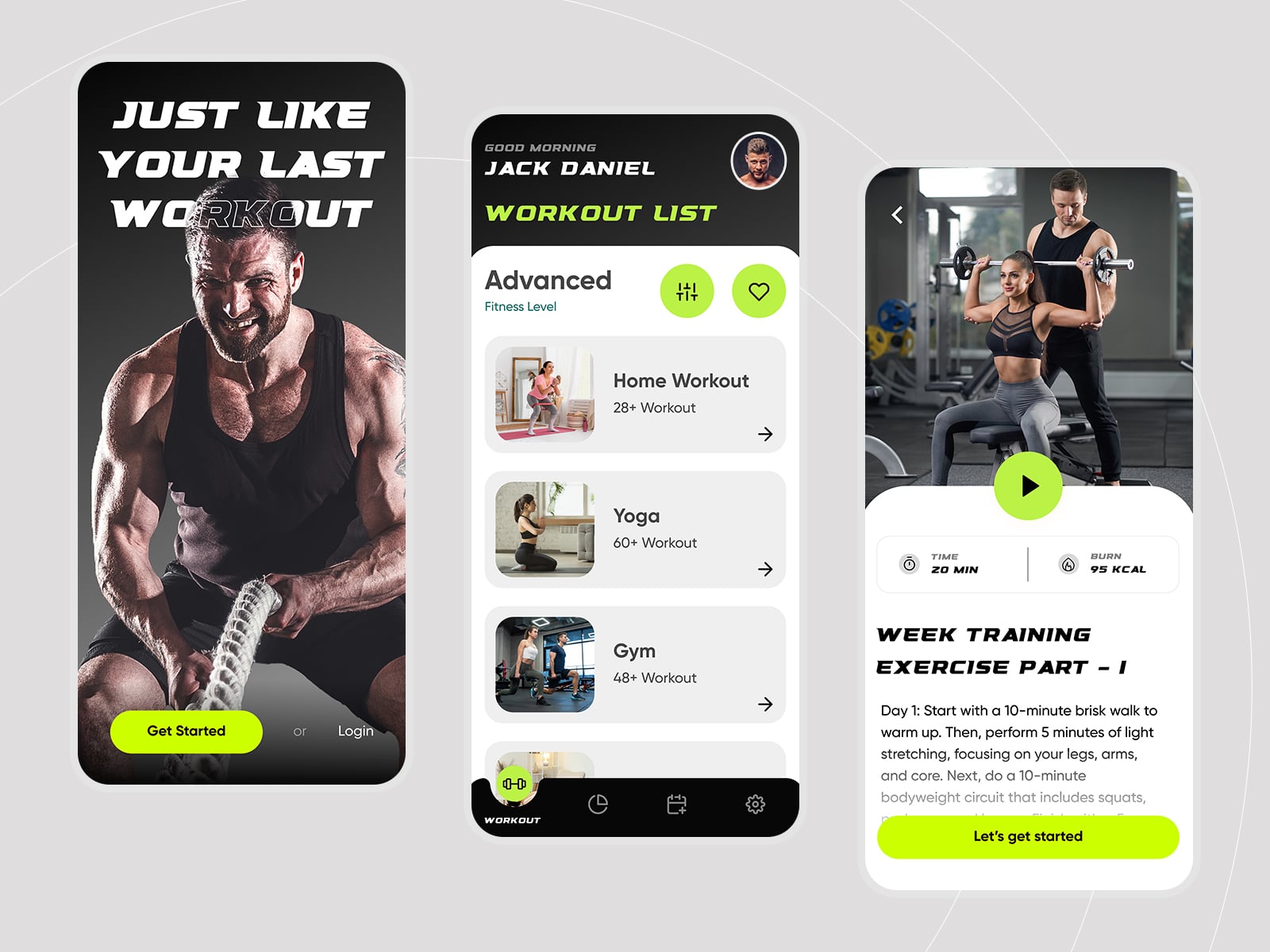
Fitness became a religion a few years ago for many people around the world. App developers started to create fitness-tracking apps after seeing the interest of the masses. Many companies offer different types of services for clients. The latest technology innovation is fitness tracking and mobility solutions. This blog will help you build a fitness application.
Types of Fitness Apps
Fitness apps are available in many categories, each focusing on a specific aspect of health and wellbeing. Here are some of the most common categories.
Activity Tracking Apps
Apps like these track your steps, distance, and calories. Sensors in smartphones and wearable devices are often used to track movement.
Apps for Workouts and Exercise: These apps offer users a variety of workout routines, fitness plans, and exercises. These apps can be customized to fit different fitness goals and levels, such as strength training, cardio, and yoga.
Nutrition and Diet Apps
These apps allow users to track their diets, calorie intake, and nutritional information. Apps can help with meal planning, recipes, and a balanced diet.
Running and Cycling Apps
These apps are designed specifically for runners and cyclists and offer features such as GPS tracking, route planning, and pace monitoring.
Weight Loss Apps
Weight loss apps help users track their progress and provide guidance on healthy habits, diet, and exercise.
Yoga and Meditation Applications
These systems include guided yoga sessions, breathing exercises, meditation techniques, and mindfulness practice to improve mental and psychological well-being.
Health Metrics Monitoring Apps
Wearable devices can be used to track health metrics such as heart rate, blood pressure, sleep patterns, and more. These apps provide insights into health trends.
Social Fitness Applications
These solutions have a social component, which allows users to compete with their friends and share their fitness accomplishments.
Personal Trainers
Personal trainer apps provide virtual coaching and customized workout plans that are tailored to the user’s specific goals and preferences.
Specialized Fitness Apps
Apps that focus on fitness niches include those for seniors, pregnant women, rehabilitation exercises, and more.
Gym and Fitness Center Apps
Apps are created by fitness centers or gyms to offer schedules, bookings of classes, management of memberships, and virtual training sessions.
Hiking and Outdoor Adventure Apps
These apps are geared toward outdoor enthusiasts and provide information on hiking routes, navigation tools, and outdoor activities.
Mind-Body Applications
These apps combine fitness with mental health by incorporating meditation, mindfulness, and relaxation techniques.
Virtual Reality Fitness Apps
Virtual reality is used to create immersive workout experiences.
Your target audience, the market, and your value proposition will determine what type of fitness and health application you develop. Understanding your users’ needs, whether you are interested in comprehensive fitness app development for a niche solution is crucial to the success of a fitness app.
These apps can also track your body fat and coffee consumption with the aid of light sensors. These apps will create shopping lists and recipes to promote healthier lifestyles.
These apps also track and evaluate your sleep. A digital alarm can help you wake up quickly and easily. These apps also offer voice control.
How many of them have made it into the hearts and minds of the people?
All of us are aware of the situation in the app world. Fitness app developers have contributed the same amount of apps to the arena, but not all make it to the shore.
Fitness app developers understand the needs of their target audience, fitness enthusiasts, and provide them with features and benefits that will help them.
Statista estimates that there will be approximately 86.3 million fitness and healthcare app users in the United States. Only in the United States are fitness and healthcare apps used. The COVID-19 virus has increased the health consciousness of people.
A closer look at these data shows that awareness and motivation are the main reasons behind the popularity of fitness-tracking applications. It’s best to not jump to conclusions and instead examine all aspects related to custom fitness app development.
How do you create a fitness-tracking app that is successful?
Wearable devices are a big part of the market when we discuss activity tracker apps. When developing fitness apps, it is important to make sure that they work with wearable devices.
Recent research shows that the wearables market has grown dramatically in the past two years.
How many people made it through? How many people made it to the end as they planned/dreamed?
I don’t think there are many.
18 Must-Have Features for Fitness Tracking Application
You may wonder what features you should include in your fitness tracking app once you decide to create it. Talk to several fitness app developers to gain a better idea of what you need.
Here are some things to consider when developing a fitness app:
A Personalized experience
If the application is going to track the user’s daily activity, it will need the user’s data, such as age, height, and gender.
The application will be able to determine the correct details if it is aware of these factors.
You can customize your application to suit the user’s needs. You may include essential features like:
- Create user profiles
- Plan your exercise routines
- Save the statistics and he/she will get
- Setting goals
- Comparison of performance/progress
Customized Diet Plans
Die customized diet plans are based on your energy requirements. A customized diet plan is also designed specifically for you. If you have food intolerances or allergies, we will take them into account. If you include foods that you like, it will be easier to stick with a diet plan.
You can easily avoid the pitfalls of browsing the market without any apparent purpose or intention.
The shopping list and recipe that comes with the customized diet plan are very helpful. You save time because they make the shopping and planning process easier.
Nutrition Tracking
Every fitness activity is centered around nutrition. Many nutrition-tracking apps are available on the market. They allow users to manage their weight by giving them data about calories burned, controlling water balance, and motivating them to adopt healthy eating habits.
Fitness apps have many features, but one of them is the ability to set personal goals. The app can help a person who has trouble sticking to a healthy diet. It will create shopping lists, and even gather healthy recipes.
Integrate geolocation
This feature allows users to create and track their walking routes and workouts.
This platform will enable your fitness-tracking app to make a lasting impression on its users. They can track their fitness progress over longer periods.
Push Notification System & Reminders
Regular exercisers would never miss a workout. Keeping up with our busy schedules, we sometimes forget. A push notification can help us remember our workout in such situations.
Many Fitness app development companies invest a great deal of time and money in the notification system. They must remember that Push Notifications are a double-edged blade.
Pushing Push Notifications too much can annoy users. They may even leave your app and never return.
Gamification
Everybody has done five push-ups or crunches when the music in the gym is our favorite. We also tend to push harder when we have a goal to reach.
Imagine if you could complete these goals and receive rewards as part of your fitness app’s game.
You will be given several tasks to complete. Failure to complete the tasks will result in penalties. The penalties can be in the form of a physical exercise, such as 250 burpees, or they could come in monetary terms.
Social Sharing
Who doesn’t love to boast about their achievements on social media? It is hard to imagine fitness applications without social media integration in the age of social media platforms.
Social media is a popular way for customers to share their accomplishments. They feel more motivated and fulfilled.
Fitness apps allow users to track their fitness, share their progress with friends and family, and interact in groups.
In addition, social media apps from third parties are integrated into fitness apps to facilitate content sharing.
Multi-device synchronization
You can allow your fitness application to sync with multiple mobile devices, just like Fitbit. This feature will help your app stand out as users will be more inclined to use it if they can sync their devices.
When developing an app, mobile app developers must consider this.
Goal Setting
Fitness apps help users achieve measurable results with their daily workouts. Goal setting is done by the user and should be easy to understand.
Fitness apps are also focused on setting nutritional goals and sports activities. To make the most of these applications, users must select a daily activity, enter a goal value, or choose a date by which to reach the goal. They also show statistics on task performance.
Progress Tracking
It is impossible to achieve your fitness goal if you don’t measure your progress. You can count repetitions, sets, calories, and hours.
App owners can use the app to track their progress using these measurable units. They will be motivated by the information and continue to use the app to achieve more.
Fitness apps mustn’t track excessive amounts of data to avoid data overstimulation. The user can see the summary of their fitness routine in a graphical format, which includes a route map and color-coded segments.
Deep heart monitoring
For many years, doctors, athletes, and astronauts have used heart rate monitors for measuring stress and other health metrics. A majority of fitness apps today use optical heart rate sensors.
Welltory is an app that allows users to monitor their heart rate variability anywhere and at any time.
The best heart rate diagnostics results are provided with 33 stats. These statistics are explained and personalized.
Sleep tracker
It is an essential feature of today’s hectic lifestyle. This feature records the times when the user did not get a good night’s sleep. This indicates the times he was active while sleeping.
The wearable fitness tracker will require the user to activate the feature before sleeping. To get the best out of this device, you may need to be a bit more disciplined to maintain a healthy lifestyle.
Altimeter
This feature can be useful for users who prefer climbing stairs rather than using an escalator, wheelchair, or lift. This feature measures how many stairs were climbed and the height change (altitude).
This feature can also be used to determine the effort made during jogging and running.
Food Tracker
Add this feature to your app and you will allow users to track their food intake. It will allow them to track their food intake in real-time and determine the exact requirements for their body.
Integration motivates and guides users, and has a perfect market space.
Water Tracker
Water tracker is an innovative feature that is sure to be a hit with users. It can be included in fitness trackers and used to its full advantage. It is important to remember that water is an essential part of our diet.
Water makes up roughly 60% of the human body. The human body needs 2-3 liters per day.
This app will remind the user to stay hydrated and drink water at different times of the day. This app helps the user achieve their goals by ensuring that they are getting enough water into their bodies.
Online chat & consultation
Absent a trainer, physical exercise can be difficult. Users may have many questions about different exercises. Online consultation and chat can be a great help to your users in such situations.
Online consultation allows them to get answers to any questions they may have at any time. With the chat system, they can also talk to their fellow exercise buddies and share their progress and experiences.
Live Streaming and Video-on-demand
Fitness applications cater to users who prefer to have access to multiple sources of information. Video tutorials can be used by the app to provide visual information for those who prefer it.
These videos also contain motivational music and are a great way to get users motivated.
Some of the most popular fitness mobile apps include SWEAT, Grokker, and ClassPass.
Tracking the number of steps taken
The ability to track steps is an essential feature for startups that want to build apps that help users keep track of their workouts. This feature allows users to check the total number of steps they have taken in a day, as well as calories burnt while performing different activities such as walking, running, and cycling.
Wrap-Up
This is the last blog post to help you better understand the importance of mobile fitness apps. This awareness has turned into a modern trend or craze which will continue to grow for many years. People have started to adopt apps that help them improve their health and fitness.
This segment is set to have a bright future with the help of technologically advanced tools such as development sensors, switch controls, and digital atmospheric pressure meters.
You can contact any fitness app development company to discuss the costs of fitness apps, including hourly rates and advanced features.
You can also conduct a market study and consider adding key features that will help you stand out among the other fitness apps.
The key to a successful application is a smart strategy and highlighting features.