
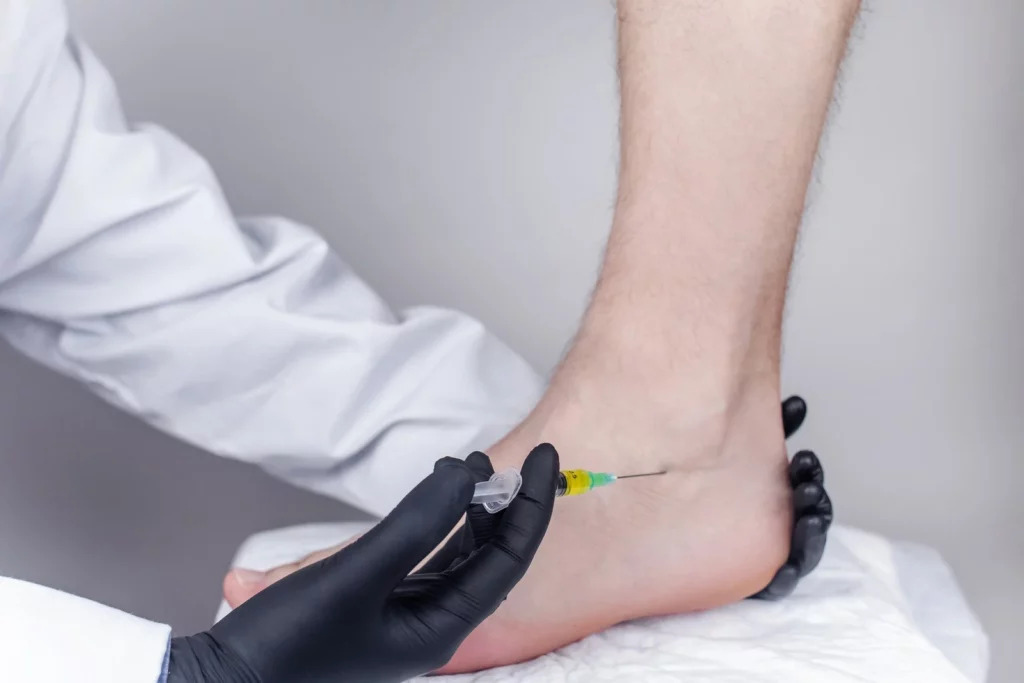
At Phoenix Sports Medicine clinic, we understand the debilitating effects of conditions like Plantar Fasciitis and Achilles Tendinitis. Plantar Fasciitis and Achilles Tendinitis can be debilitating conditions, causing pain and hindering mobility. Traditional treatments sometimes fall short, leaving patients searching for alternative solutions. PRP (Platelet-Rich Plasma) Injections have emerged as a groundbreaking treatment option, offering hope and relief to those suffering from these conditions.
Understanding Plantar Fasciitis and Achilles Tendinitis
Plantar Fasciitis
Plantar Fasciitis is a common foot condition characterized by inflammation of the thick band of tissue (the plantar fascia) that runs across the bottom of your foot and connects your heel bone to your toes. This condition often results in stabbing pain near the heel, especially with the first steps in the morning.
Achilles Tendinitis
Achilles Tendinitis, on the other hand, is the inflammation of the Achilles tendon, which connects your calf muscles to your heel bone. This condition typically causes pain and stiffness along the back of the leg near the heel.
Traditional Treatments vs. PRP Injections
Traditional Treatments
Conventional treatments for Plantar Fasciitis and Achilles Tendinitis often include rest, physical therapy, and anti-inflammatory medications. While these methods can relieve some, they may yield only a short time for others.
PRP Injections: A Revolutionary Approach
Phoenix PRP Injections have emerged as a game-changer in treating musculoskeletal conditions. This cutting-edge therapy harnesses the healing power of your body’s platelets to stimulate tissue repair and regeneration.
How PRP Injections Work
During a PRP procedure, a small sample of your blood is drawn and processed to isolate the platelets. These platelets, rich in growth factors, are injected directly into the affected area. This concentrated dose of growth factors accelerates the body’s natural healing process.
The Advantages of PRP Injections
Targeted Healing
PRP Injections offer precise and targeted treatment. By delivering the platelets directly to the injury site, we maximize the healing potential, leading to faster recovery times.
Minimally Invasive
Unlike surgical interventions, PRP Injections are minimally invasive. This means less downtime and a quicker return to your regular activities.
Reduced Risk of Side Effects
Since PRP utilizes your body’s resources, the risk of adverse reactions or complications is significantly reduced compared to more invasive procedures.
The Procedure: What to Expect
- Consultation and Assessment: Prior to the procedure, a thorough evaluation will be conducted to determine if PRP Injections are the right course of action for your specific condition.
- Blood Extraction: A small sample of your blood will be taken and processed using a centrifuge to separate the platelets.
- Injection Process: The concentrated PRP will be carefully injected into the affected area under guided ultrasound, ensuring precise placement.
Recovery and Post-Procedure Care
After the PRP Injections, it’s essential to follow post-procedure care instructions provided by your healthcare provider. This may include rest, gentle exercises, and avoiding certain activities.
FAQs
Q: How effective are PRP Injections for Plantar Fasciitis and Achilles Tendinitis?
A: PRP Injections have shown remarkable effectiveness in treating these conditions, with many patients experiencing significant pain reduction and improved mobility.
Q: Is PRP treatment painful?
A: The procedure is typically well-tolerated. Any discomfort is minimal and temporary.
Q: How long does it take to see results after PRP treatment?
A: Results vary, but many patients report improvement within a few weeks, with continued progress over several months.
Q: Are there any potential risks or side effects associated with PRP injections?
A: While rare, some patients may experience mild pain or swelling at the injection site. Serious complications are extremely uncommon.
Q: Can PRP be used as a standalone treatment, or is it recommended with other therapies?
A: PRP can be used as a standalone treatment, but it is often incorporated into a comprehensive treatment plan for best results.
Q: How many PRP sessions are typically needed for optimal results?
A: The number of sessions required depends on the severity of the condition and the individual’s response to treatment. Your healthcare provider will discuss a personalized plan with you.
Q: Does insurance cover PRP treatment?
A: Coverage may vary depending on the insurance provider and specific policy. It is advisable to consult with your insurance company for details.
Conclusion
PRP Injections represent a groundbreaking advancement in the treatment of Plantar Fasciitis and Achilles Tendinitis. Their targeted approach, minimal invasiveness, and impressive success stories make them a powerful option for those seeking relief from these conditions